
Subtotal $0.00

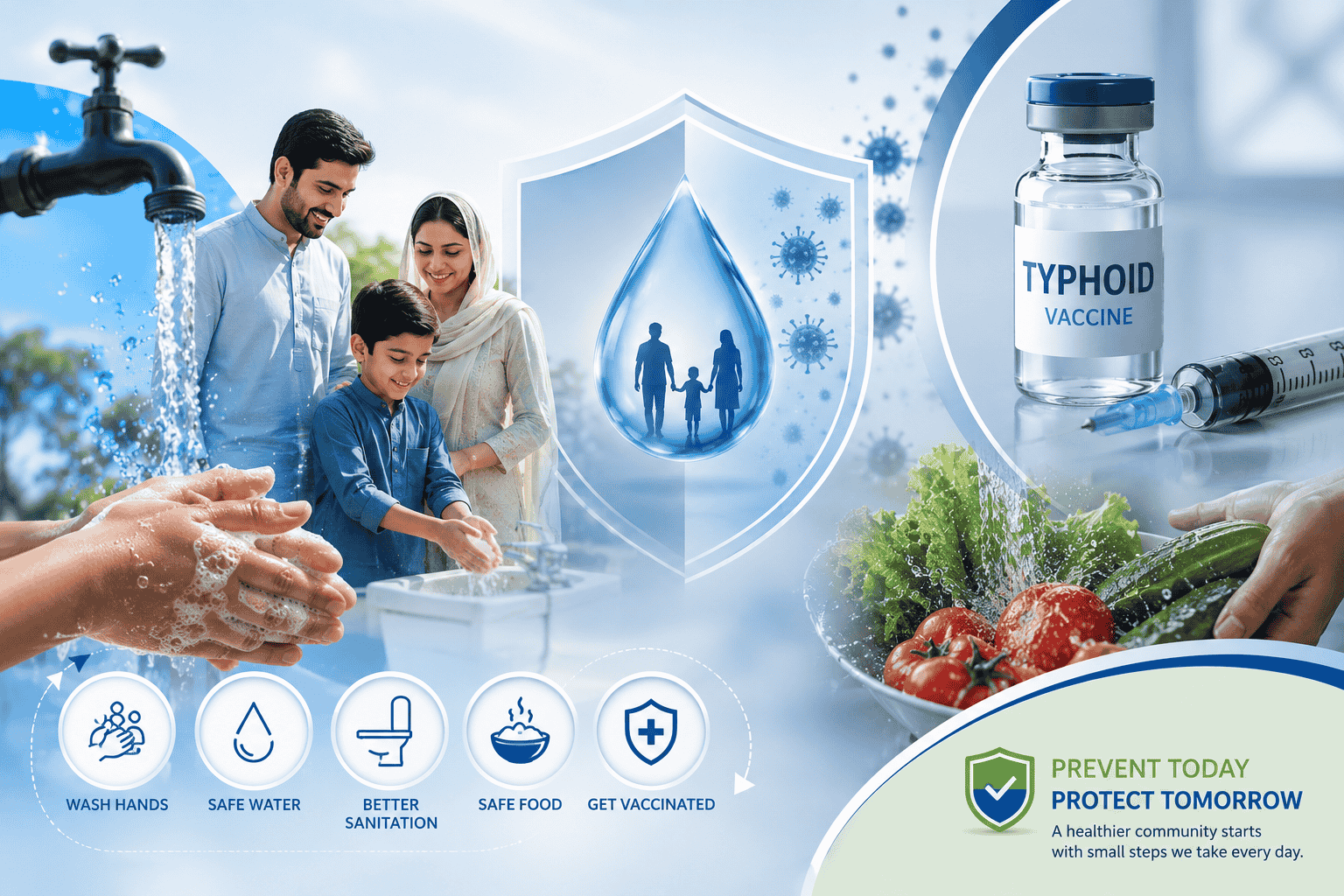
Typhoid does not begin with a fever.
The risk often starts much earlier—with contaminated water, unsafe food, poor sanitation, or inadequate hand hygiene.
Typhoid fever is a potentially serious infection caused by Salmonella Typhi. The bacteria usually spread when a person consumes food or water contaminated with the bacteria. Symptoms can include prolonged fever, headache, fatigue, nausea, abdominal pain, constipation or diarrhoea, while severe cases can lead to serious complications.
That is why preventing typhoid requires action before symptoms appear.
For communities in Pakistan, effective typhoid prevention depends on a combination of awareness, access to safe water and sanitation, good hygiene practices, food safety, timely healthcare, and vaccination.
What Is Typhoid Fever?
Typhoid fever is a bacterial infection caused by Salmonella Typhi, a bacterium that lives only in humans.
An infected person can shed the bacteria, which may then contaminate food or water. When another person consumes that contaminated food or water, the infection can spread further.
This creates a transmission chain:
Contaminated Water or Food → Exposure → Infection → Illness → Further Transmission
Breaking even one of these links can help protect individuals, families, and communities.
Globally, WHO estimates that around 9 million people develop typhoid each year, with approximately 110,000 deaths annually, based on 2019 estimates. Children and populations without reliable access to safe drinking water and adequate sanitation face particularly high risks.
Why Typhoid Prevention Matters in Pakistan
Typhoid remains an important public health concern in Pakistan.
The country has previously faced outbreaks of extensively drug-resistant (XDR) typhoid, making prevention particularly important because antimicrobial resistance can make infections more difficult and costly to treat.
Pakistan also became the first country in the world to introduce the WHO-recommended typhoid conjugate vaccine into its routine immunization programme in 2019, beginning with Sindh and subsequently expanding vaccination efforts.
However, vaccination is only one component of typhoid prevention.
WHO recommends combining vaccination with safe drinking water, improved sanitation, food hygiene, health education, and appropriate hygiene practices.
How Does Typhoid Spread?
Typhoid is primarily transmitted through the faecal-oral route.
In practical terms, this means that bacteria from an infected person can enter food or water when sanitation and hygiene practices are inadequate.
Common transmission risks may include:
- Drinking contaminated water
- Eating food prepared with unsafe water
- Poor handwashing after using the toilet
- Inadequate sanitation
- Unsafe food preparation or handling
- Eating contaminated raw foods
- Living in communities where access to clean water is limited
Because the infection can spread before communities fully recognize the risk, prevention needs to become part of everyday behaviour.
1. Make Safe Water a Priority
Safe drinking water is one of the most important protections against typhoid.
Contaminated water can transmit several infectious diseases, including typhoid. WHO identifies safe water and adequate sanitation as essential components of typhoid prevention.
Communities should prioritize water from safe and reliable sources.
Where water safety is uncertain, appropriate treatment methods such as boiling or other recommended purification approaches may be necessary.
Water storage also matters. Safe water can become contaminated if it is stored in dirty or uncovered containers.
Remember:
Safe source. Safe storage. Safe consumption.
2. Wash Hands Regularly
Hand hygiene can interrupt the transmission of many infectious diseases.
Hands should be washed thoroughly with soap and safe water, particularly:
- After using the toilet
- Before preparing food
- Before eating
- Before feeding children
- After handling potentially contaminated materials
WHO specifically highlights regular handwashing and appropriate hygiene practices as part of typhoid prevention.
A simple behaviour performed consistently can help break the transmission chain.
Food can become contaminated at multiple points—from preparation and storage to serving.
3. Practice Safe Food Handling
Important food-safety practices include:
- Washing hands before preparing food
- Using safe water for cooking and washing
- Cooking food thoroughly
- Eating freshly prepared food while it is still properly heated
- Washing fruits and vegetables carefully
- Keeping utensils and preparation surfaces clean
- Avoiding food that may have been exposed to unsafe handling conditions
Food handlers play an especially important role because a single contaminated source can potentially expose many people.
WHO identifies appropriate food-handler hygiene as an important strategy for controlling typhoid.
4. Improve Sanitation
Typhoid transmission is closely connected to inadequate sanitation.
Proper disposal of human waste reduces the risk of bacteria entering water supplies, food environments, and community spaces.
Effective sanitation requires action at several levels:
Household Level
Families need access to safe toilets, clean water, and appropriate waste disposal.
Community Level
Drainage, sanitation infrastructure, waste management, and water-quality monitoring can reduce broader environmental risks.
Institutional Level
Schools, workplaces, healthcare facilities, food outlets, and public spaces need adequate hygiene and sanitation systems.
Preventing typhoid therefore requires both individual behaviour and stronger community systems.
5. Vaccination Is an Important Layer of Protection
Vaccination plays an important role in preventing typhoid and reducing disease burden.
WHO recommends typhoid conjugate vaccine (TCV) as the preferred vaccine for routine programmatic use because it can be used in younger children and is expected to provide longer-lasting protection than older typhoid vaccines.
Pakistan introduced TCV into its routine immunization programme in 2019 and has conducted large-scale vaccination campaigns targeting children.
Vaccination, however, does not replace safe water, sanitation, and hygiene.
The strongest prevention approach combines:
Vaccination + Safe Water + Hygiene + Sanitation + Food Safety + Awareness
6. Recognize the Symptoms and Seek Appropriate Care
While prevention should begin before symptoms appear, recognizing possible signs of typhoid is also important.
Symptoms may include:
- Prolonged fever
- Headache
- Fatigue
- Nausea
- Abdominal pain
- Constipation or diarrhoea
- Loss of appetite
- Rash in some cases
Typhoid symptoms can resemble other febrile illnesses, so diagnosis should be made by qualified healthcare professionals rather than relying on symptoms alone.
Anyone experiencing persistent fever or concerning symptoms should seek appropriate medical advice.
Antibiotics may be used to treat confirmed typhoid, but increasing antimicrobial resistance makes correct diagnosis and responsible treatment increasingly important.
Breaking the Typhoid Transmission Chain
Typhoid prevention becomes easier to understand when we think of transmission as a chain.
Contaminated Water or Food
The bacteria enter the environment through unsafe sanitation or contamination.
Break the link: Improve water safety, sanitation, and food hygiene.
Exposure
A person consumes contaminated food or water.
Break the link: Use safe drinking water and follow good food-safety practices.
Infection
The bacteria enter the body.
Break the link: Vaccination can provide an important additional layer of protection.
Illness
Symptoms develop and medical care may be required.
Break the link: Recognize symptoms and seek appropriate healthcare.
Further Transmission
An infected person may contribute to further contamination if hygiene and sanitation are poor.
Break the link: Handwashing, sanitation, safe food handling, and appropriate medical management help protect others.
Every broken link protects a community.
Why Community Awareness Is Essential
Typhoid prevention cannot rely only on hospitals and healthcare facilities.
Much of the prevention happens in:
- Homes
- Schools
- Communities
- Food outlets
- Workplaces
- Markets
- Water and sanitation systems
This is why public health awareness campaigns are important.
Effective community awareness can help people understand:
- How typhoid spreads
- Why safe water matters
- When handwashing is critical
- How food can become contaminated
- Why vaccination is important
- When to seek healthcare
Information becomes more valuable when it leads to practical action.
From Awareness to Access and Community-Level Action
Public health impact requires more than delivering a message.
People also need access to the tools, services, and systems that allow them to act on that information.
For typhoid prevention, this may involve:
Awareness
Helping communities understand transmission and prevention.
Access
Connecting people with vaccination, healthcare, safe water, sanitation, and reliable health information.
Action
Encouraging practical behaviours such as handwashing, safe food handling, appropriate water treatment, vaccination, and timely healthcare-seeking.
When these elements work together, awareness can translate into healthier behaviour and stronger community protection.
PharmOSS and Public Health Awareness
At PharmOSS, we believe meaningful public health impact requires awareness, access, and community-level action.
Through our public health and community engagement capabilities, we support healthcare organizations, development partners, and other stakeholders with initiatives designed to strengthen health awareness and encourage practical action at the community level.
Our capabilities include:
- Community awareness campaigns
- Public health communication
- Health education initiatives
- Field implementation
- Community engagement
- Healthcare professional engagement
- Training and capacity building
- Surveys and feedback collection
- Monitoring and evaluation
- Digital health engagement
- Public health program implementation support
Typhoid prevention demonstrates why this integrated approach matters.
The disease may eventually present as fever—but prevention starts much earlier.
It starts with safer water, cleaner hands, safer food, vaccination, stronger sanitation, and informed communities.
Prevention Begins Before Symptoms Do
Typhoid is preventable.
Breaking the transmission chain requires action from individuals, families, healthcare professionals, communities, and health systems.
Safe water can break the chain.
Hand hygiene can break the chain.
Food safety can break the chain.
Vaccination can break the chain.
Awareness can help communities understand where that chain begins.
Every broken link protects a community.
PharmOSS — Supporting awareness, access, and community-level action for stronger public health outcomes.